
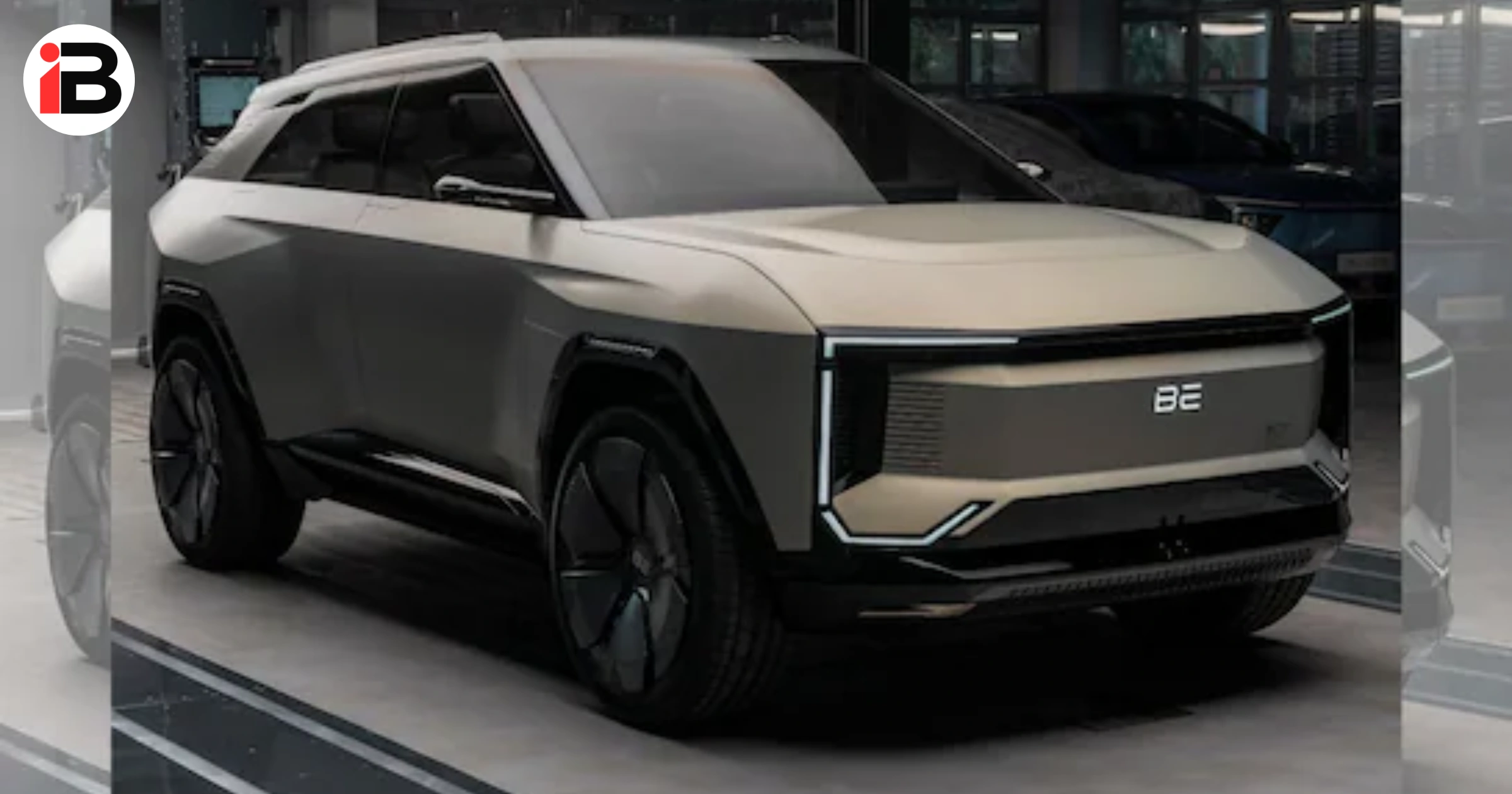
Mahindra is continuing to strengthen its electric vehicle strategy, but instead of rushing new launches, the company now appears focused on its next big volume product. After introducing multiple EVs within a short period, Mahindra has confirmed that its next major electric SUV will arrive in 2027. This upcoming model is expected to rival the Tata Harrier.ev and will likely be positioned as a premium offering in the growing midsize electric SUV segment. The vehicle is expected to be based on Mahindra’s dedicated Born Electric architecture and could emerge as one of the brand’s most important EV launches yet.
Production Version of BE.07 Concept Confirmed
During Mahindra’s Q3 FY2026 earnings call, Rajesh Jejurikar, Executive Director and CEO of the Auto and Farm Business, confirmed that the production version of the BE.07 concept, first showcased in August 2022, will make its debut in 2027.
While the final name has not been officially confirmed, Mahindra is unlikely to retain the BE.07 badge for the production model. Industry expectations suggest names like BE 7 or BE 7e could be used instead.
Personally, this feels like a strategic move. Mahindra seems to be reserving this SUV as a mass-volume electric product rather than a niche technology showcase.
Part of Mahindra’s Expanding Born Electric Lineup
Once launched, the new SUV will become the fourth model in Mahindra’s dedicated Born Electric range. By 2027, the company plans to offer a strong EV portfolio consisting of:
- XUV 3XO EV
- XUV 400
- BE 6
- Production version of BE.07
- XEV 9S
- XEV 9e
This lineup clearly shows Mahindra’s long-term commitment to electrification. From my perspective, Mahindra is building a complete EV ecosystem rather than relying on a single flagship model.
Expected Size and Market Positioning
The BE.07 concept measures 4,565 mm in length, 1,900 mm in width, and 1,660 mm in height, along with a 2,775 mm wheelbase. The production model is expected to retain similar proportions.
This places it neatly between the BE 6 and the larger XEV 9S in Mahindra’s lineup. The SUV will directly compete with premium electric SUVs like the Tata Harrier.ev.
In my opinion, this positioning makes perfect sense. The midsize SUV category is currently the fastest-growing space in India, and an electric alternative with strong range figures could attract both urban buyers and early EV adopters.
Battery Options and Performance Expectations
Mahindra is expected to offer the upcoming electric SUV in two rear-wheel-drive variants.
The base version could feature:
- 170 kW motor producing around 228 hp
- 380 Nm torque
- 59 kWh LFP battery pack
- Approximate range of 530 km
The higher variant may include:
- 210 kW motor producing about 282 hp
- 380 Nm torque
- 79 kWh LFP battery pack
- Claimed range close to 650 km
If these figures translate well into real-world performance, the SUV could become one of the longest-range electric vehicles in its category. Personally, Mahindra focusing on range confidence is a smart decision, as range anxiety still remains a major concern for Indian buyers.
Premium Features and Advanced Technology
The upcoming electric SUV is expected to be heavily loaded with premium equipment. Likely highlights include:
- Semi-adaptive suspension
- Front storage compartment (frunk)
- Gesture-controlled powered tailgate
- Electrically deployable flush door handles
- 12.3-inch passenger touchscreen
- Panoramic sunroof with ambient lighting
Safety equipment is also expected to be comprehensive, featuring Level 2+ ADAS, seven airbags, and a 360-degree camera system.
From what we have seen in Mahindra’s recent EVs, the company is clearly pushing toward a tech-first ownership experience. However, execution and software refinement will be crucial areas to watch.
Mahindra’s EV Strategy Moving Forward
Interestingly, Mahindra appears to be slowing down immediate EV launches after an aggressive rollout phase. This pause suggests the company wants to focus on scaling production, improving supply chains, and ensuring customer satisfaction before expanding further.
Personally, this feels like a mature strategy. Rapid launches create excitement, but long-term success depends on reliability, charging ecosystem growth, and ownership experience.