
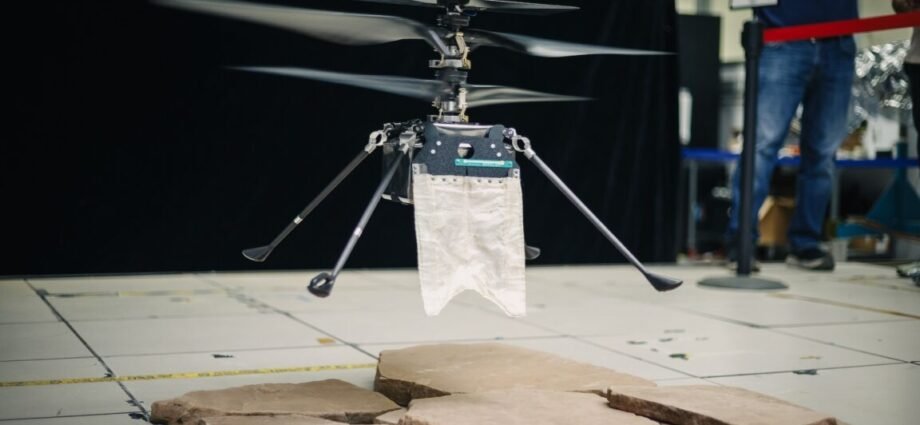
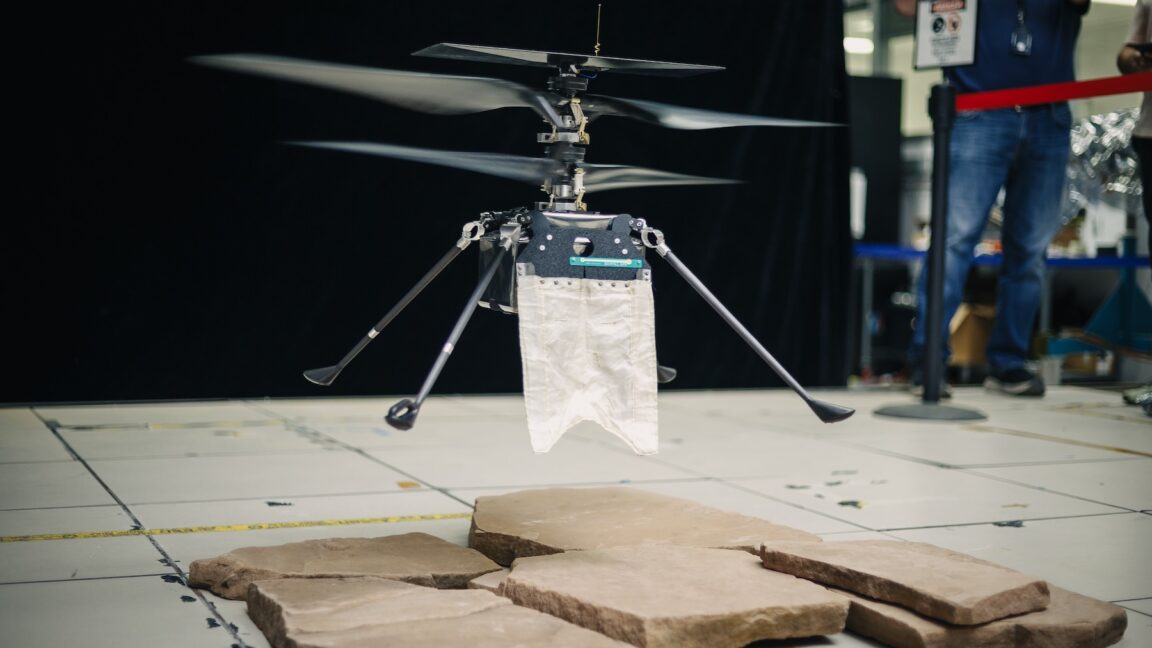
For the first time in more than 30 years, NASA has no firm plans to send any new landers or rovers to Mars. Instead, the agency’s near-term focus at the red planet is on aerial drones, a pioneering mode of exploration that didn’t seem realistic until a few years ago.
The first real use of drones for science at Mars will come with the SkyFall mission, a fleet of three helicopters set for launch as soon as late 2028. SkyFall’s helicopters will ride to the red planet with NASA’s Space Reactor-1 “Freedom” mission, which has the primary objective of demonstrating nuclear electric propulsion in deep space.
The launch schedule is aggressive for SR-1 Freedom and SkyFall, projects that didn’t even exist in NASA’s portfolio six months ago. NASA’s plan for the SR-1 Freedom mission, estimated to cost $2.1 billion, calls for repurposing the core module of the canceled Gateway lunar space station into a testbed for nuclear electric propulsion. SkyFall will build on NASA’s success with the Ingenuity helicopter, an experimental vehicle that became the first rotorcraft to fly on another world in 2021.