
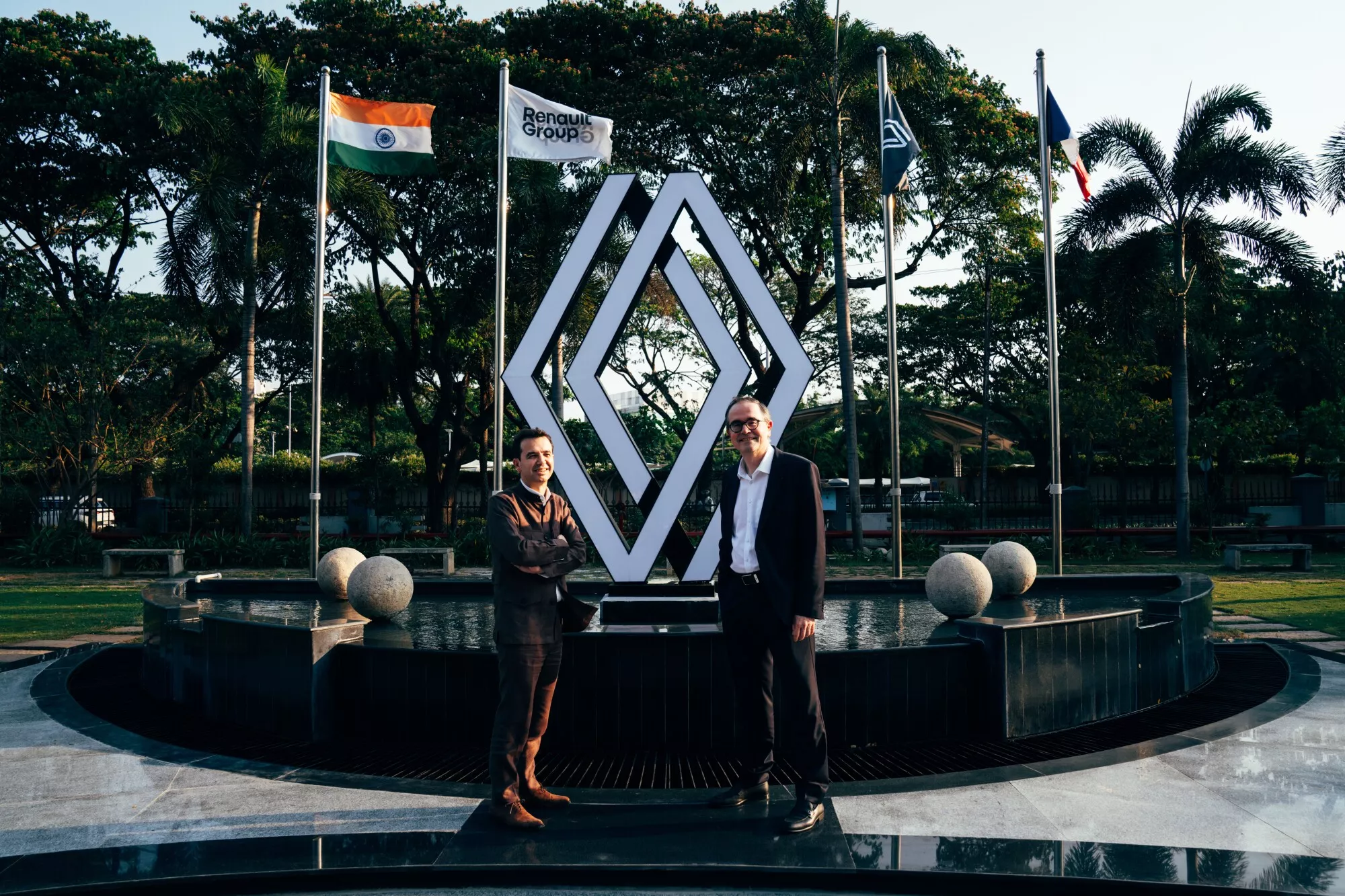
There is a number that puts Renault’s India ambitions into sharp context. In FY2022–23, the French automaker sold 78,926 units in India. By FY2024–25, that figure had collapsed to 37,900 units. By the end of 2025, Renault barely held onto a 0.81% market share — just enough to round out India’s top ten carmakers. It is against this backdrop that CEO François Provost arrived in Chennai last week and unveiled what the company is calling its most aggressive India push yet.
The plan has a name — futuREady India — and a deadline of 2030. But before getting to what Renault is promising, it is worth understanding how it got here.
Leadership turmoil, the Covid-19 pandemic, semiconductor shortages, and geopolitical disruptions all played a role in the brand’s decline. So did a structural problem that Provost himself has now acknowledged openly: the old organisational setup was built around global processes that moved too slowly for India’s pace. Decisions that should have been made locally were routed through global hierarchies, costing the brand speed and relevance in a market where both matter enormously.
That is the first thing being fixed. The new model hands full decision-making authority to the India team, with complete local control across products, pricing, and go-to-market execution. The provost’s framing was direct — India needs to be run for India, by people accountable to India.
The product side of the plan is where the numbers get ambitious. Renault is targeting a seven-model portfolio by 2030, spanning ICE, full hybrid, and fully electric vehicles, with a goal of capturing 5% of the Indian market. To put that in perspective, that would mean going from 0.81% to 5% in roughly four years — in a market where Maruti Suzuki holds nearly 40%.
The three models that will take Renault to seven include a three-row version of the Duster and the Bridger compact SUV in both ICE and electric iterations, alongside the four models already in the current lineup. Renault will also become the fourth carmaker in India to offer factory-fitted CNG, after Maruti, Tata, and Hyundai – a move that signals a genuine read of how Indian buyers actually buy cars, not just how the company wishes they would.
Underpinning the new lineup are two platforms built specifically with India in mind. The RGEP replaces the ageing small-car architecture, allowing for more powertrain options, including CNG, and better in-cabin technology. The RGMP handles the higher segments, supporting the Duster and its derivatives. Renault is targeting localisation levels of up to 90%, aimed at improving cost competitiveness while insulating operations from global supply chain volatility.
Chennai is being repositioned as the operational spine of this entire strategy. The group’s Chennai facility brings together 6,000 engineers and IT specialists working on vehicle architecture, software, and simulation — one of Renault’s largest engineering centres worldwide — and will now develop platforms and technologies for global markets, not just India. The company has set a target to generate €2 billion in annual exports by 2030, covering vehicles, components, and R&D services.
There are early signs the recovery is real, not just planned. Renault India recorded 5,046 units in March 2026 — a 77% year-on-year jump — closing FY2025–26 with total domestic sales of 42,018 units, up 11% from the previous fiscal year. India’s car market itself is projected to touch 6 million units by 2030, up 36% from 2025, with demand for SUVs and premium vehicles rising sharply — which is precisely the space Renault is trying to re-enter.
The gap between 0.81% and 5% is steep. But for the first time in several years, Renault appears to have both a credible plan and the organisational clarity to execute it. Whether the market gives it the time to do so is the bigger question.
Sources:
- Autocar Professional – Renault Bets on India as Top-Three Market
- Autocar Professional – Renault India March 2026 Sales
- Autocar India – Renault 7-Model Lineup by 2030
- Renault Group Official Press Release – futuREady India
- Free Press Journal – Renault Sales Decline Data
- Kashmir Reader – Renault Targets 5% Market Share by 2030
- Autocar India – Top 10 Carmakers in India 2025
- BW Auto World – Renault India MD on Market Share Crash